
Statement comes after meeting with former ministers and economists close to the president to discuss economic guidelines for his fourth term
President Luiz Inácio Lula da Silva said Thursday (5) that fiscal and legal responsibility are necessary to attract foreign investment to Brazil. Amid growing market concerns over fiscal policy, he made the remarks just hours after meeting with Vice President Geraldo Alckmin, ministers, former ministers, and economists close to him.
“We must have legal responsibility and fiscal responsibility. That is why we cannot treat partnerships as a game,” he said during the first meeting of the National Council for the Industrialization of Critical and Strategic Minerals (Cimce), at the Planalto Palace. “We know that, to attract investment, we need to have our economy in order. People want to know whether we are serious.”
Earlier in the day, at the Alvorada Palace, Lula met with former Finance ministers Fernando Haddad and Guido Mantega; Alckmin; Finance Minister Dario Durigan; Planning and Budget Minister Bruno Moretti; Chief of Staff Miriam Belchior; Management and Public Service Innovation Minister Esther Dweck; Brazilian Development bank (BNDES) President Aloizio Mercadante; and former BNDES president Luciano Coutinho.
Also in attendance were economists Laura Carvalho, a professor at the University of São Paulo (USP) and an associate researcher at the Brazilian Institute of Economics of the Getulio Vargas Foundation (FGV Ibre), and Eduardo Moreira, founder of news portal ICL. The meeting participants are economists with heterodox views. Further meetings with civil society and different sectors of the market will be held, Durigan said.
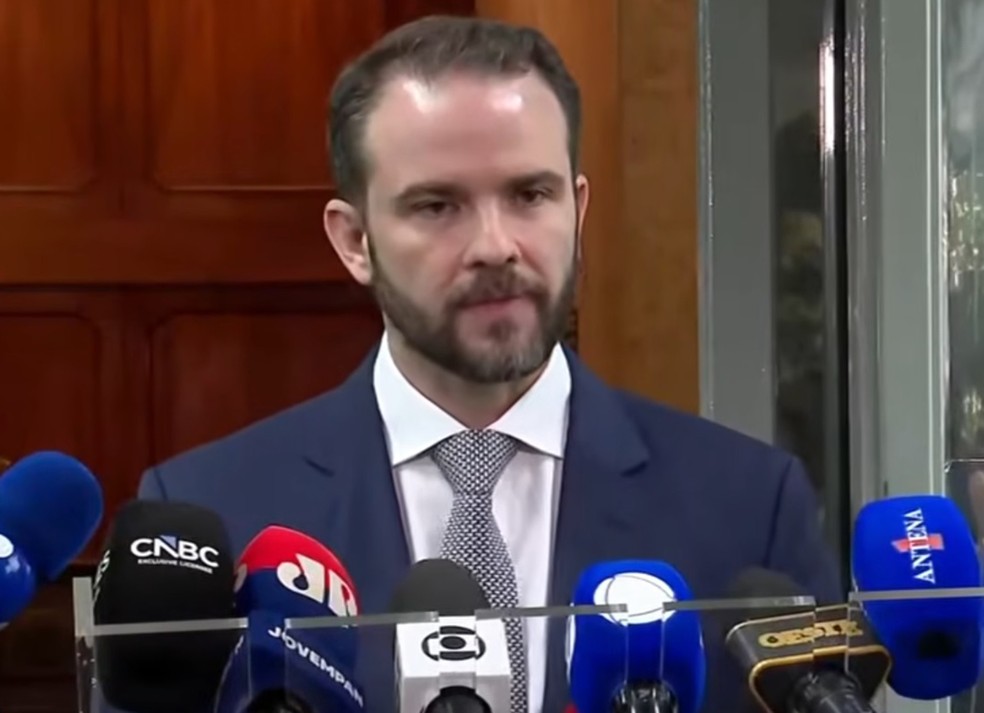
“There was no discussion of specific measures, and this is not yet the time to address any specific measures,” the minister told reporters after the meeting, adding that participants agreed on their assessment of the economy and the paths to be followed in the coming years. He did not confirm, however, whether the federal government intends to submit proposals to the National Congress this year.
The gross general government debt (DBGG) reached 82.9% of GDP in recent months, more than 10 percentage points higher than at the start of Lula’s third term, and projections continue to point to further increases in the coming years. The central government’s 12-month cumulative primary deficit stands at R$49.5 billion, or 0.38% of gross domestic product (GDP).
Proposals under way
Despite the lack of concrete proposals at the meeting, it marked the first step toward defining measures that could be adopted. Until now, discussions with the president had focused on trying to convince him of the need to adjust public finances. But Lula has shown little urgency in moving forward with the issue, according to government sources who spoke to Valor.
The proposals are expected to be presented to the president after he returns from trips to Turkey and the Philippines next week, Durigan said. The finance minister and Moretti will be responsible for organizing suggestions based on the meeting’s discussions. According to government sources, both had already been working on assessing possible measures, discussing their effects individually and seeking to identify alternatives that Lula might accept.
The challenge is to find a middle ground that improves the trajectory of public finances without imposing losses on the population or undermining social programs, measures to which Lula has shown resistance. Economic officials, however, believe it is important to make progress on structural changes to public spending, particularly mandatory expenditures, which are on an upward trajectory and put pressure on the budget, making it harder to stabilize public debt.
Proposals discussed so far, such as using the midpoint of the fiscal target as the benchmark for budget freezes and allowing mandatory spending to be frozen, are considered important to give budget management some breathing room. Public finance experts, however, believe these measures must be accompanied by more far-reaching changes to send a consistent signal that public finances are sustainable. There is still no agreement on which measures Lula will be willing to accept.
Defining these measures also hinges on the president’s political priorities. Until now, Lula had been less focused on fiscal discussions and more concerned with responding to what he interpreted during the second round of the elections as a public desire for changes in the way the government operates, expressed above all in the streets and through mobilization on social media. Government sources say Lula’s political timetable differs from that of the economic team, requiring caution in presenting proposals.
In this context, ministers have adopted an approach described as almost “educational” to explain to the president why spending needs to be reviewed. Their argument is that public spending will have to be “rationalized” to ensure the sustainability and continuity of social programs. In their conversations, they have avoided even using the expression “fiscal adjustment.”
Among the spending “rationalization” measures under consideration is the possibility of creating greater coordination between the constitutionally mandated minimum spending levels for health and education, allowing states and municipalities to adjust some expenditures to their demographic needs.
On the revenue side, discussions continue over taxing securities such as Real Estate Credit Bills (LCIs) and Agribusiness Credit Bills (LCAs). One faction within the government argues that the tax should be levied through the income tax system, which would require debate in Congress, rather than through the Tax on Financial Transactions (IOF), on the grounds that the latter would be poorly received by financial markets.
Also under discussion is strengthening the agenda to combat special privileges, particularly excessive salaries in the judiciary, military pension benefits and congressional budget amendments. In his remarks after the meeting, Durigan said topics discussed included improving fiscal results, the quality of public spending, interest rates, international pressures on fuel prices and the cost of living for the population.
Asked about changing the parameters of the fiscal framework, the minister declined to disclose any decisions in advance. He said, however, that the government wants to move toward primary surpluses in the coming years by reinforcing the current fiscal rules. The primary balance targets in the Budget Guidelines Bill are surpluses of 0.5% of GDP in 2027, 1% in 2028, 1.25% in 2029 and 1.5% in 2030.
*By Giordanna Neves, Lu Aiko Otta, Mariana Andrade and Lucas Teixeira — Brasília
Source: Valor International
https://valorinternational.globo.com/