
Washington is expected to push for access to critical minerals, trade concessions and closer security ties, but analysts see obstacles even under a Bolsonaro presidency
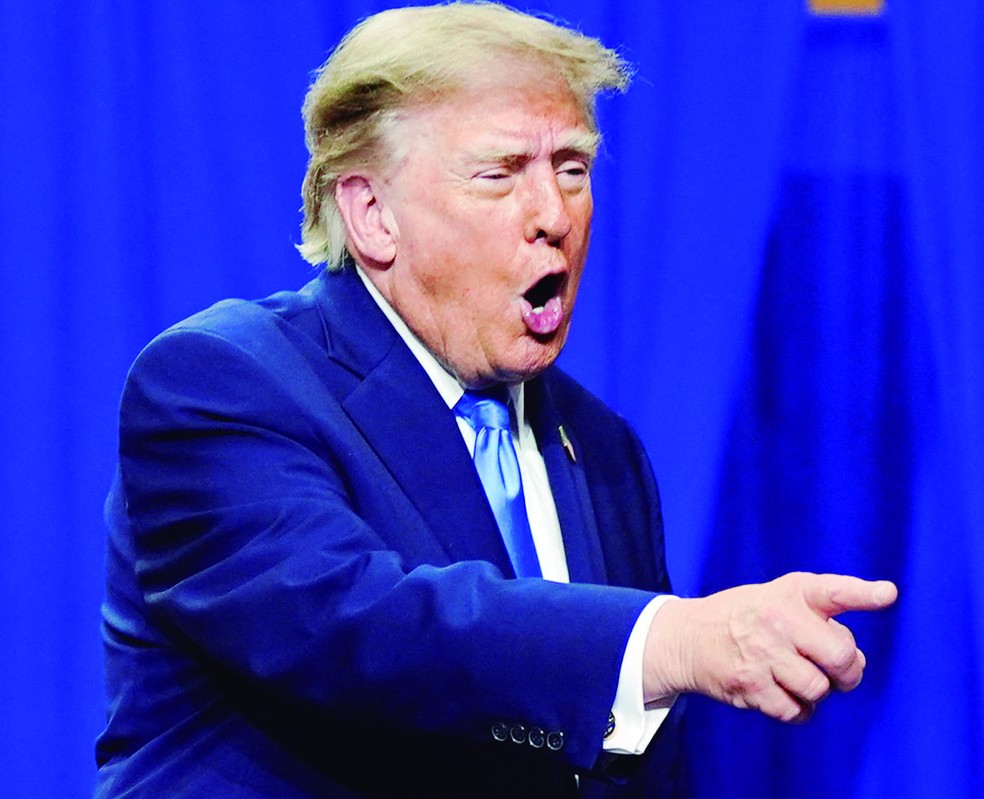
The Trump administration is expected to renew pressure on Brazil over access to critical minerals, trade concessions and regional security cooperation once Sunday’s presidential runoff is decided, although analysts say Washington may struggle to secure its demands regardless of who wins.
President Donald Trump has made no secret of his support for Flávio Bolsonaro’s candidacy. He praised the senator’s performance after the first round. He had already received Flávio and his brother, Eduardo Bolsonaro, at the White House during the campaign.
Despite the Bolsonaro family’s ideological affinity with Trump, many assess that Flávio, if elected on Sunday (25), would struggle to advance measures in Washington’s interest.
“The Trump administration may demand new terms for U.S. ethanol from a potential Flávio Bolsonaro government, given that they would be friendly administrations,” said Kellie Meiman Hock, a former diplomat and former official at the Office of the U.S. Trade Representative (USTR).
She recalled another Trump administration objective: to move Latin America’s largest economy closer to Washington and further from Beijing.
But Hock, who worked in Brazil for several years, said she doubted that whoever is elected would have the political backing and support from major economic sectors needed to implement Washington’s agenda.
“In Flávio’s case, political affinity with the United States is one thing; the numbers are another. China is deeply involved in Brazil’s economy,” she said.
If President Lula is reelected, the path will likely remain much the same as it has been so far: rejecting U.S. demands on ethanol and distancing from China.
Another issue likely to return to the negotiating table is U.S. access to Brazil’s mineral resources, as part of talks over American tariffs on Brazilian products.
“The United States is likely to press for priority access to critical mineral and rare-earth reserves, seeking to restrict Chinese investment in the supply chain and in the processing of these materials in Brazil,” said Bruna Santos, director of the program studying U.S.-Brazil relations at the Inter-American Dialogue, a Washington-based think tank focused on Latin America.
Washington’s efforts made little headway during Lula’s administration. The Brazilian government argues that the country is open to partnerships with all nations and that its priority is to process these minerals and add value to them domestically.
Santos believes the United States may also expect gestures from Brazil on climate agreements if the opposition wins on Sunday. She also sees Washington stepping up demands for Brazil to loosen its current digital-platform regulations.
Lula and Flávio will likely handle these issues differently if they lead the government, as will the White House-promoted regional security agenda for Latin American countries.
Trump is betting on an initiative called the Shield of the Americas, which brings together 14 South and Central American countries under Washington’s leadership, all with right-wing governments. Its stated goal is to coordinate efforts against drug trafficking in the region.
Brazil and Mexico, Latin America’s two largest economies, are not part of the initiative, despite their center-left administrations. Flávio has said he intends to bring Brazil into the alliance if elected.
The Lula government does not prioritize the initiative. Instead, it favors regional partnerships and the existing cooperation between U.S. and Brazilian agencies.
Political science professor Edgar Franco-Vivanco of the University of Michigan, who is Mexican, said countries that choose to maintain a relationship with the United States that is not automatically aligned with Washington may face greater difficulties in dealing with the White House.
“On the other hand, that autonomous relationship can be a political advantage for some countries,” he said, citing Mexico and Brazil, where the presidents’ standing strengthened when Trump adopted confrontational measures toward those countries.
*By Marcos de Moura and Souza — São Paulo
Source: Valor International
https://valorinternational.globo.com/