
Government is pursuing technical, diplomatic and political efforts while seeking a transition period before new antimicrobial rules take effect in September
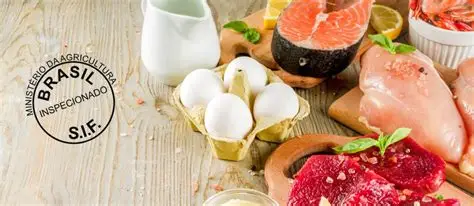
With less than a month until the European Union’s ban on Brazilian animal products takes effect, Agriculture Minister André de Paula said Wednesday that the government is working to overturn the measure and keep Brazil on the bloc’s list of approved suppliers.
Speaking to reporters at the International Animal Protein Show (SIAVS) in São Paulo, De Paula said, “The government is prepared to work from the technical, diplomatic, and political standpoints” to reverse the decision. He added that government representatives have been meeting with officials from the European Commission to discuss the issue.
In May, the European Commission excluded Brazil from the list of countries permitted to export animal products to the EU, citing Brazil’s inability to show adherence to EU standards on antimicrobial use. The EU bans the use of antimicrobials as growth promoters and of drugs intended for humans in animal production. This ban is set to start on September 3.
“It is unacceptable for Brazil to be excluded from the list,” De Paula said.
He acknowledged that complying with requirements, such as those governing antimicrobial use, may require an adjustment period for producers, but stressed that Brazil remains a recognized supplier to the European market.
“We have been supplying Europe for decades, as well as many other markets that are as demanding as, or even more demanding than, the European market,” he said.
The minister also said the government is working to prevent the restrictions from disrupting the supply chain and noted the possibility of a transition period. According to him, there is still hope that Brazilian producers will remain eligible to supply the European market.
At the same time, Brazil is seeking to diversify its export markets, De Paula said, noting a technical mission from South Korea scheduled to visit Brazilian beef-processing plants later this month.
Roberto Perosa, president of the Brazilian Beef Exporters Association (Abiec), expressed optimism at SIAVS that the Brazilian government might negotiate a transition period with the European Union. This would help Brazil comply with the EU’s antimicrobial rules governing the beef supply chain and enable continued beef exports to Europe beyond September.
“Meeting those requirements would take one production cycle,” Perosa said, referring to the two-to-three-year period between the birth of a calf and its slaughter.
Since the European Union demands evidence that antimicrobials were not used at any stage of the animal’s life, Brazil might need two to three years to restore its access to the European beef market.
“As things stand today, that is the risk,” Perosa said, referring to the possibility that Brazil may no longer be able to export beef to Europe beginning in September. “But we remain hopeful that the Brazilian government can negotiate a longer transition period with Europe so that we can maintain trade flows,” he added.
The government has been negotiating with the bloc for additional time to implement full traceability throughout the cattle production cycle. It is also considering a nationwide ban on the use of those substances—rather than restricting the rule only to exporters supplying Europe—as a way of signaling its commitment to meeting the EU’s requirements in the future.
*By Mariana Letizio and Clarice Couto, Globo Rural — São Paulo
Source: Valor International
https://valorinternational.globo.com/