
Banking executive is the first cabinet member officially confirmed for Lula’s fourth presidential term
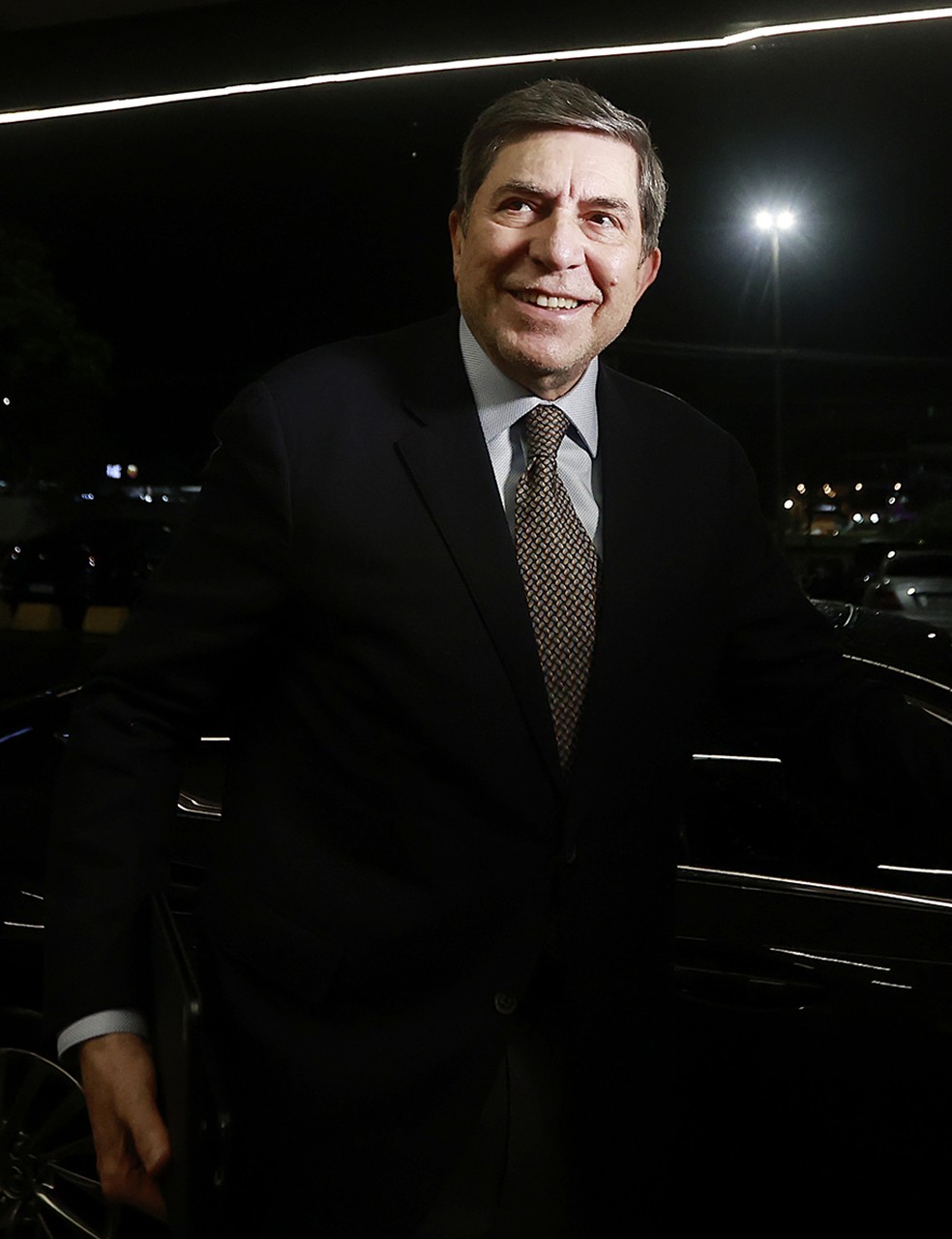
Bradesco Chairman Luiz Carlos Trabuco has accepted President Luiz Inácio Lula da Silva’s invitation to serve as finance minister during his fourth term. The banker emerged as the front-runner on Monday (Nov. 23), but his appointment was not officially announced until late Thursday afternoon, following a nearly two-hour meeting at the Alvorada presidential residence. He becomes the first cabinet member confirmed for Lula’s next administration and will succeed Finance Minister Dario Durigan in January, following the presidential inauguration.
Trabuco has been one of Lula’s closest contacts in the financial industry since the president’s first term. Over the years, he has met with President Lula, both privately and alongside others, to discuss the direction of Brazil’s economy. He is also regarded as a key link between corporate leaders and the government and was among the 16 bankers and business executives who attended a dinner hosted by President Lula in late August, ahead of the first round of the presidential election.
Appointment negotiations
The banker emerged as the leading candidate this week after meeting with Lula on Monday, when the president offered him the position. Initially reluctant, Trabuco asked for time to consider the offer.
Over the following days, he met with Lula’s aides in São Paulo before making his decision. On Thursday, he traveled to Brasília to accept the invitation. He will take charge of the Finance Ministry in 2027. Ahead of the announcement, Brazil’s benchmark Ibovespa stock index closed 6.07% higher, its biggest gain since October 5, while the real rose sharply against the dollar and interest rate futures fell steeply.
Despite the positive market reaction, the appointment has met with resistance within Lula’s Workers’ Party (PT) and among more left-wing members of the governing coalition. Even before the official announcement on Thursday, Congressman Pedro Uczai, the PT’s leader in the Lower House, voiced his opposition to the choice. “I’m not speaking on behalf of the party’s lawmakers, but for myself. I think he may not be the best option,” he said.
Shortly before meeting with Trabuco to finalize his appointment, Lula gathered his current economic team to discuss additional fiscal adjustment measures. The proposal, expected to be submitted to Congress before year-end, will focus on reducing mandatory spending.
The meeting was attended by Finance Minister Durigan and his executive secretary, Rogério Ceron; Planning Minister Bruno Moretti and his executive secretary, Guilherme Mello; Chief of Staff Miriam Belchior; and Management and Innovation Minister Esther Dweck. All left shortly after Trabuco arrived.
Durigan and Moretti, however, returned two hours into Lula’s meeting with Trabuco. Senator Camilo Santana (PT), a potential candidate for chief of staff, also met with the incoming finance minister at the presidential residence.
Other contenders
Trabuco was not the first candidate floated to lead the next administration’s economic team. Shortly after the election, newly reelected Piauí Governor Rafael Fonteles (PT) emerged as a potential pick. Regarded within the party as a candidate with strong technical credentials, he would have had to relinquish the governorship before even beginning his new term, weakening support for his appointment within the PT.
Other contenders included members of the current administration, such as Vice President Geraldo Alckmin (Brazilian Socialist Party, PSB), who previously headed the Ministry of Development, Industry, Trade and Services (MDIC) and has a strong interest in economic affairs. Another possibility was the return of former Finance Minister Fernando Haddad, who had told allies he was not interested in returning to the job.
Haddad also confirmed to Lula this week that he had no intention of joining the fourth-term administration. Even so, PT aides suggest the former São Paulo mayor could reconsider at the president’s request.
With Lula yet to make a decision on who would lead the Finance Ministry, keeping Durigan in the role had also gained traction. Following the passage of the fiscal adjustment package and the start of discussions on further measures, government officials began arguing that it made little sense for one economic team to devise a fiscal policy and another to implement it.
Appointing a banker, however, is not unprecedented for Lula. During his first two terms, he chose Henrique Meirelles, a former international president of BankBoston, to head Brazil’s Central Bank. Lula continues to praise his tenure to this day.
Banking career
Trabuco has spent 59 years at Bradesco, joining the bank at the age of 16 as an office assistant and working his way through every level of the banking profession. He was elected a director in 1984 and became CEO on March 10, 2009. He also served as president of other companies within the Bradesco group.
One of his biggest challenges at the helm was integrating HSBC’s Brazilian operations following the 2015 acquisition. At the time, the banking industry was navigating Brazil’s worst recession in decades, while Bradesco was seeking to regain its competitive footing against Itaú Unibanco, which had merged with Unibanco several years earlier.
The Joaquim Levy precedent
At Lula’s suggestion, Trabuco had previously been approached about becoming finance minister during President Dilma Rousseff’s (PT) second term. Amid the political and economic crisis that followed the 2014 elections, he was the former president’s preferred candidate for the position but turned down the offer.
Instead, Trabuco recommended Joaquim Levy, then a managing director at Bradesco, who took office on January 1, 2015. Facing criticism from the PT and tensions with Rousseff herself, Levy lasted less than a year in the position.
Members of the PT are already drawing parallels between the two bankers. Shortly after Trabuco’s arrival at the presidential residence was confirmed, Congressman Lindbergh Farias (PT), a former party leader in the Lower House, expressed reservations about the appointment.
“Regarding today’s appointment to the Finance Ministry, what comes to mind most is Joaquim Levy’s tenure. I hope history doesn’t repeat itself,” he wrote.
Academic background
Trabuco graduated from the Marília School of Philosophy, Sciences and Letters (FAFI), now part of São Paulo State University (Unesp), and holds a postgraduate degree in social psychology from the São Paulo School of Sociology and Politics Foundation (FESPSP).
His academic background is reflected in the emphasis he places on social issues in his speeches, a quality that appealed to Lula, who got to know the banker during international trips between 2003 and 2010.
Writing on social media, Durigan said that “a country moves in the right direction when it is governed with seriousness and integrity” and expressed confidence that this would be the case “under incoming Minister Trabuco.”
“You can count on me and my entire team when you take office,” he said.
(Ruan Amorim and Giordanna Neves contributed reporting.)
*By Lucas Borges Teixeira, Sofia Aguiar and Andrea Jubé — Brasilia
Source: Valor International
https://valorinternational.globo.com/