
Ulrich Brand argues that tackling the ecological crisis also means rethinking how much energy and raw materials the world uses
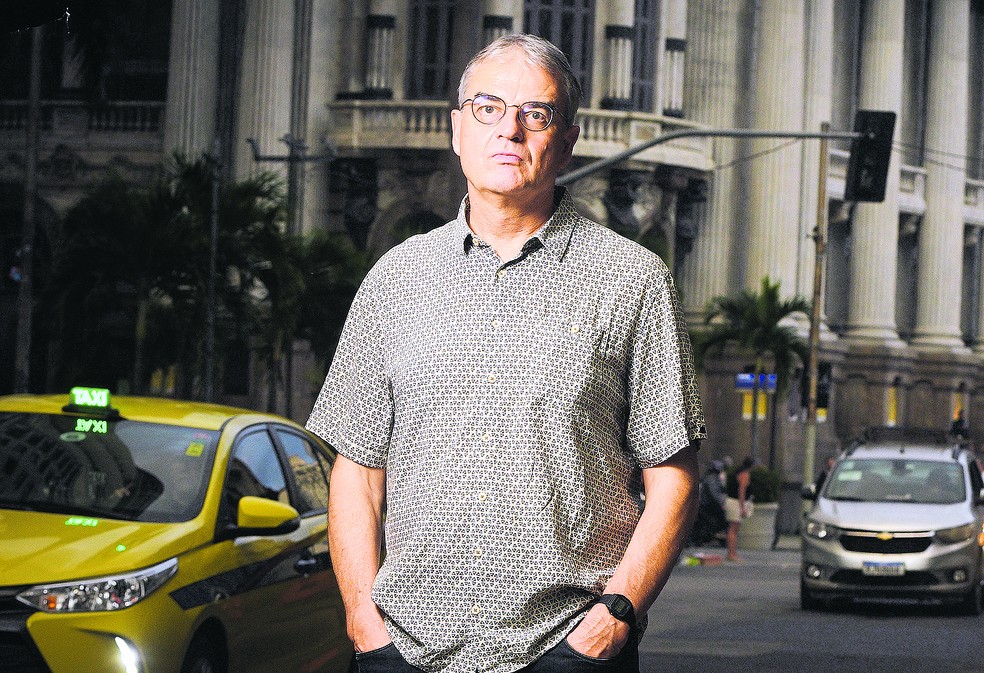
The climate crisis is exposing the limits of an unsustainable economic model, German political scientist Ulrich Brand argues. Decarbonizing the economy, one of the main themes of COP31 in Türkiye, is necessary, he says, but it will not be enough to slow the ecological crisis if the world continues to exploit natural resources so intensively. “The problem isn’t just replacing fossil fuels with renewable energy. If the growth model stays the same, we’ll keep using more and more energy and materials. That’s the structural limit we face.”
Brand came to Brazil last week to launch the Portuguese-language edition of “Capitalism at the Limit: A Political Ecology of a World in Crisis,” which he co-wrote with Markus Wissen, a professor of social sciences at the Berlin School of Economics and Law. Elefante and the Rosa Luxemburg Foundation, a German nonprofit dedicated to social research, co-published the Portuguese edition.
A professor of international politics at the University of Vienna, Brand is a leading figure in political ecology, a field that examines the relationships among the economy, politics, society, and the environment. In his work, he argues that these elements cannot be understood in isolation and examines how essential systems—such as transportation, food, energy, housing, and communications—are organized and shaped by economic and political interests. “You don’t have society on one side and nature on the other. The way we produce food, build cities, or organize transportation depends as much on biophysical processes as it does on economic and political decisions. Political ecology challenges that very distinction,” he explains.
Brand says this perspective connects the climate crisis directly to the prevailing development model. He cites the concept of the “imperial mode of living,” which he and Wissen developed to describe rich countries’ historical reliance on cheap labor and natural resources from the Global South. “The prosperity of the Global North was built on Brazilian soybeans, minerals from Latin America, Africa, and Asia, and cheap labor. But today, countries such as China, India, and Brazil itself are reinforcing that model. More people want to buy cars, eat meat, and travel by plane. That increases competition for natural resources and makes the system even more prone to conflict,” he notes.
That helps explain why simply switching technologies will not solve the environmental crisis, Brand argues. He warns that the current energy transition risks perpetuating inequality in a new form, which he calls “green colonialism.” “There’s a real risk that wealthy countries’ efforts to make their economies greener will continue to depend on extracting lithium, copper, rare earths, and other minerals from the Global South. You replace fossil fuels with clean energy, but you keep exploiting the same places. The question isn’t just which technologies we’ll use, but who benefits from them and who bears the environmental and social costs.”
Brand argues that public policy should track not only emissions cuts but also overall energy and material use. “The test should be whether we’re reducing global resource use. That means more public transportation and fewer private cars, more resilient agriculture, and cities designed so people don’t have to travel as much. The debate needs to move beyond technology to what kind of well-being we want to achieve,” he explains. That does not mean halting economic development or overlooking the private sector’s role, he stresses. “Some sectors, though, need to grow, such as public transportation, quality housing, and ecological agriculture. The point is to abandon the idea that everything has to grow indefinitely.”
Brand also considers Brazil’s role in the ecological transition. In his view, the country has important advantages: a high share of renewables in its energy mix, rich biodiversity, and the ability to wield international influence. But he sees a contradiction between that potential and the expansion of extractive industries.
“Brazil talks about progressive policies, but it also relies on resource extraction. The challenge is to build a new development model that reconciles exports with high standards of environmental protection and social justice. Exports will remain important, but not at any environmental or social cost.”
In practice, Brand says, that means prioritizing public policies that improve people’s well-being. “Good urban transportation, healthy food, and public infrastructure are all part of the ecological transition. It’s not just about cutting emissions. It’s about improving living conditions.”
Brand is also cautious about the growth of data centers and critical mineral extraction, both of which are gaining prominence in Brazil’s industrial strategy. He argues that decisions on these projects require planning and public participation. “It’s not about being for or against them. What matters is discussing where these projects will be located, how they’ll affect water, energy, and local communities, and who will benefit. The public debate needs to happen before those decisions are made.”
Despite his skepticism about international climate negotiations, which he sees as unduly influenced by fossil fuel interests, Brand says recent political shifts may make room for a more ambitious agenda. “Crises can speed up change, but they aren’t enough. We also need concrete alternatives that are already working and a society that can see them. We need to show people that there are other ways to organize the economy and everyday life.”
*By Vanessa Oliveira — Rio de Janeiro
Source: Valor International
https://valorinternational.globo.com/