
Demand for overseas investments surges after Lula’s reelection, fueled by fiscal and political uncertainty despite the real’s sharp depreciation
Wealth managers and financial institutions are reporting a sharp increase in demand from Brazilian investors looking to move money overseas, amid uncertainty over economic policy in President Luiz Inácio Lula da Silva’s fourth term.
Even the real’s roughly 20% depreciation in recent days, which makes investing abroad more expensive, has done little to discourage the outflows, industry executives told Valor’s Intraday blog.
The trend had begun before the presidential election, as rising institutional risks, particularly the crisis involving Brazil’s Supreme Court (STF), prompted investors to seek greater exposure to foreign assets. Market participants say the unexpected outcome of the runoff election and early indications that the government is in no hurry to address the country’s public debt problem have accelerated the movement in recent days.
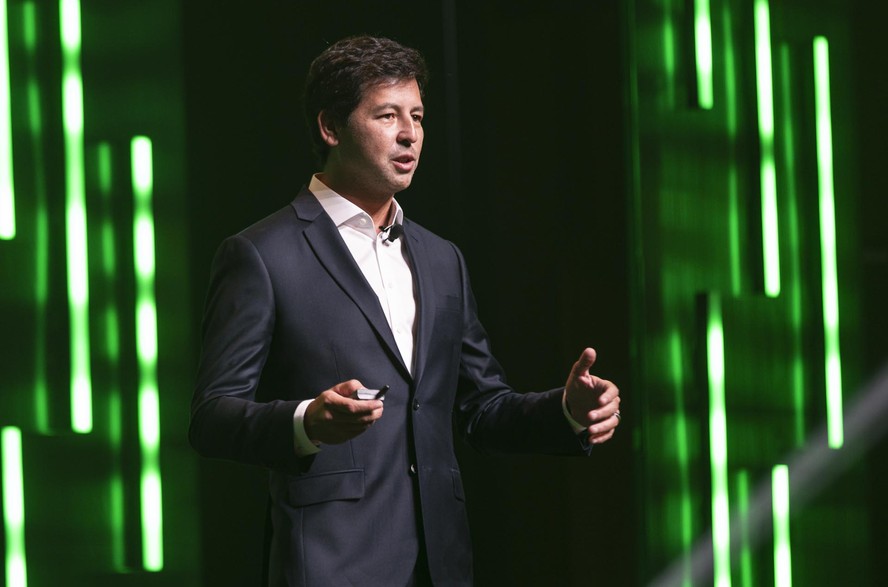
Roberto Lee, founder and CEO of Avenue, said the brokerage has recorded unprecedented volumes of overseas investment in recent days.
“Individual investment amounts [for overseas investments] have increased across all income brackets,” Lee said.
Before the election, Avenue was bringing in an average of around R$100 million a day in gross inflows for overseas investments. That figure climbed to R$150 million after the vote and has more recently reached R$250 million, he said. “But we also have peaks, with some days reaching R$450 million in inflows.”
Lee said similar patterns emerged during the previous two presidential elections, although the current wave has proved more persistent.
“First, before the elections, investments were put on hold as people waited for the results, and then, after the runoff, there was a strong flow of money abroad,” he said. “The difference is that in the last two elections, this movement lasted a week and a half, whereas this time, volumes have not only remained high but continued to grow.”
Another major brokerage reported a similar acceleration in capital moving overseas.
“Since the elections, we’ve seen strong outflows from clients looking to invest abroad,” an executive said on condition of anonymity. “We’re hearing the same thing from other partners.”
Growing political concerns
Gustavo Medeiros and Ben Underhill, of emerging markets asset manager Ashmore, recently visited Brazil to meet with investors and described a deeply pessimistic mood.
“The largest wealth managers we spoke with already have between 40% and 65% of their clients’ assets abroad. Among small and midsize wealth managers, that share ranges from 5% to 25%. Notably, all of them were looking to increase their overseas exposure because of fiscal and political risks,” they said.
Ghia Multi Family Office, which advises on approximately R$5.5 billion in assets, has revised its asset allocation policy. For clients with wealth exceeding R$10 million, it now recommends keeping 50% of their assets outside Brazil.
“We’re not making this decision in the heat of the moment after the elections. We’ve been gradually increasing our clients’ overseas allocations, and this isn’t a dollar trade. Our job is to think about wealth protection,” said Gabriel Cestari, Ghia’s founding partner.
“We’re not saying there will be capital controls or some more drastic measure, but the signals we’re getting from the government suggest it intends to fix the public finances through taxation, increases in the IOF [financial transactions tax]… Holding a strong currency is becoming less of a preference and more of a necessity.”
Cestari described the mood among clients following the election as a “hangover.”
“A lot of people are partisan supporters, and the election turned into a Fla-Flu [a reference to the fierce rivalry between Flamengo and Fluminense soccer clubs]. But for business owners, it meant a little more than that. They had hoped something would change, and their main hope was for interest rates to come down. That’s been discouraging and frightening,” he said.
Since the runoff, discussions with clients have frequently included the possibility of changing their tax residency and formally ending their tax obligations in Brazil, Cestari said. His firm, however, advises clients to carefully weigh the consequences before taking such a step.
Wealth protection over returns
Bruno de Paula, Ghia’s chief investment officer, has noticed another shift in investor behavior: for the first time, families have stopped comparing the performance of their overseas investments with that of their domestic portfolios.
“For the first time, these investors seem to be looking for assets that are uncorrelated with the rest of their portfolios. It’s almost like buying insurance,” he said.
“It shows a degree of maturity, but as a Brazilian, it also highlights the scale of the difficulties we’re facing. If the [exchange rate per] dollar goes back to R$4.90 because of measures the government could take, I don’t think those who moved money abroad will be upset or worried. They’ll sleep better.”
Thiago Picanço, partner and head of wealth management at Reach Capital, said colleagues serving retail and affluent clients have described the rush to move assets overseas as “overwhelming.”
At Reach, where clients generally invest larger amounts and many already hold substantial assets abroad, the shift has been “more controlled,” he said.
Picanço noted that the expansion of financial products and platforms in recent years has made it much easier for Brazilians to invest internationally.
Brazil had also long stood apart from its Latin American neighbors because of its deeper and more diversified financial markets. In countries such as Chile, Uruguay, Argentina and Ecuador, wealthy investors were already accustomed to holding large portions of their portfolios overseas.
“A lot of people are in panic mode, and I don’t think panic is ever a good thing. But in Brazil, even if things don’t turn out quite so badly, the country may end up looking more like the rest of Latin America, where people increasingly start thinking in dollars,” he said.
*By Arthur Cagliari and Gabriel Roca, Valor — São Paulo
Source: Valor International