
Holding company of Gol and Avianca cites risk of coordination among competitors and potential loss of rival airline’s independence
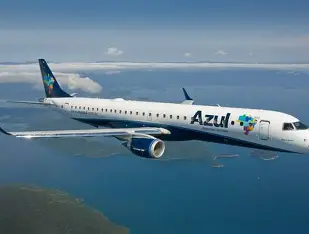
Gol believes American Airlines and United could end up coordinating with Azul in the Brazilian market — Photo: Divulgação/Azul
Abra, the holding company for Gol and Avianca, filed an administrative appeal on Tuesday (18) with Brazil’s antitrust watchdog, the Administrative Council for Economic Defense (Cade), challenging the unconditional approval of American Airlines’s investment in Azul.
Approval had been granted on July 31 by Cade’s General Superintendence (SG). In the filing, Abra cited risk of coordination among competitors, plus a window for exchanging sensitive information and a possible loss of Azul’s independence.
Abra’s decision to challenge the deal had been reported by Valor on August 14. Abra was admitted as an interested third party in the proceeding, which gives it the right to appeal the SG’s decision to the Tribunal. In fact, the deadline for the appeal was Wednesday (19). The tribunal will now review the matter, and if the appeal is accepted, it would likely further delay American Airlines’ possible investment in the Brazilian carrier. There is also a risk that the antitrust agency could demand remedies, which could even make the deal unviable.
As part of Azul’s Chapter 11 bankruptcy proceedings in the U.S., American and United decided to invest $100 million each in the Brazilian airline. United’s investment, as an airline that was already an Azul shareholder, was approved by the Cade this past February. More recently, the SG had also approved American’s investment.
Abra is among the deal’s fiercest critics, saying American will have powers similar to those of a controlling shareholder at Azul, especially given the creation of the airline’s strategic committee, which includes representatives from both American and United Airlines.
American, for its part, is a longtime partner of Gol and once held a 5% stake in the Brazilian airline before being diluted in its restructuring.
“The transaction creates a scenario in which the incentives for independent competition among American Airlines, United Airlines, and Azul may be materially reduced, raising the likelihood of coordination or competitive accommodation in scheduled air transport between Brazil and the United States. The reduction in competitive incentives can occur both directly–through diminished incentives for AA, UA, and Azul to compete aggressively with one another–and indirectly, through greater strategic interdependence between AA and UA themselves, resulting from their simultaneous participation in Azul’s governance,” Abra’s legal team said in a statement, citing two technical opinions on the matter signed by professors Carlos Emmanuel Joppert Ragazzo and Guilherme Mendes Resende.
The holding company also noted that United Airlines is already Azul’s second-largest shareholder, with roughly an 8.6% stake—the largest shareholder holds about 8.7% and is an asset manager. Abra further noted that, with the exception of United—and American Airlines, should the deal go through—all of Azul’s other individual shareholders with stakes above 5% are currently investment funds and/or institutional investors. That type of investor, the holding company argued, may have different investment horizons and incentives, and could seek to adjust or reduce their stakes over time.
“In other words, over the medium term, American Airlines’s and United Airlines’s equity stakes in Azul will tend to become even more significant and representative. In fact, American Airlines’s and United Airlines’s combined stake could reach around 19%, positioning those competitors as Azul’s principal reference shareholders,” Abra stated in the filing, signed by the law firms Alexandre Cordeiro Advocacia and Caminati Bueno Advogados.
On the 13th, the Institute for Research and Studies on Society and Consumption (IPSConsumo) asked Cade’s Tribunal to take up and deepen its review of American Airlines’ investment in Azul’s capital.
“The Tribunal has already shown that it understands the complexity of this arrangement and its possible negative effects on the Brazilian market, particularly on routes between Brazil and the U.S. We trust the panel will deepen its analysis and assess, with the necessary caution, measures capable of preserving rivalry among competing companies,” wrote IPSConsumo’s president and former National Secretary for Consumer Affairs, Juliana Pereira. IPSConsumo was denied status as an interested third party in the case by Cade’s SG.
Azul did not immediately respond to requests for comment.
Source: Valor international
https://valorinternational.globo.com/