
Legislation heads to President Lula for his signature as government seeks to avoid further spending freezes in 2026 and create budget flexibility for 2027
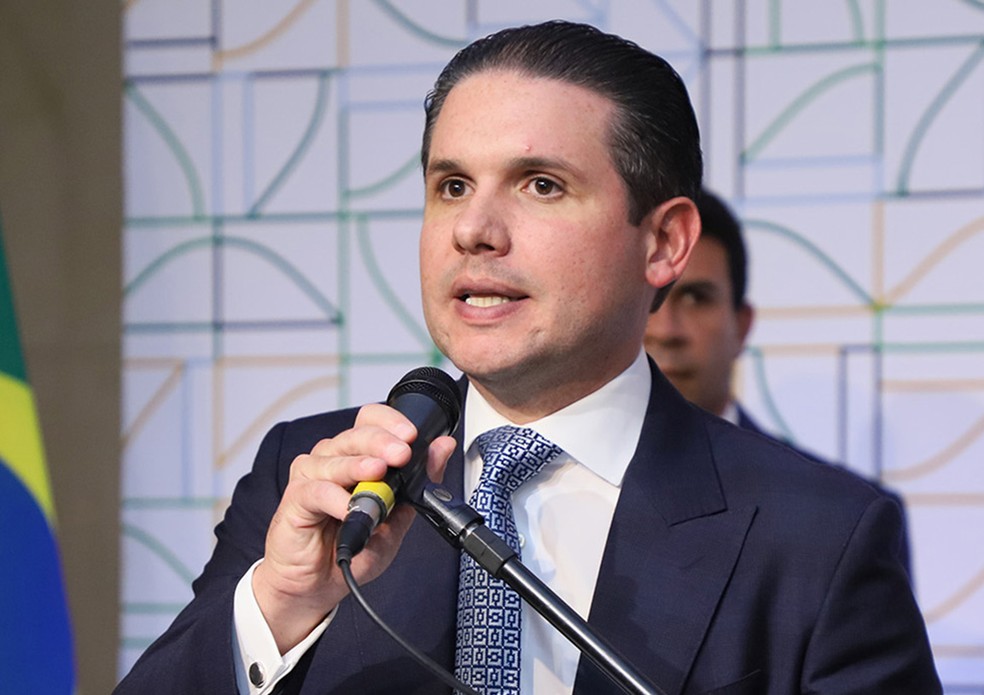
Brazil’s Lower House approved the government’s fiscal adjustment bill on Monday (Nov. 23) by a decisive 353–128 vote, rejecting all proposed amendments to the previously approved text. The complementary bill (PLP) now heads to President Luiz Inácio Lula da Silva for his signature. Lawmakers fast-tracked the vote to avert further spending freezes in 2026, ahead of the release of the government’s bimonthly revenue and expenditure report this Tuesday (Nov. 24).
Described by the economic team as the “first step” in the fiscal adjustment process, the bill is expected to generate savings of between R$45 billion and R$56 billion and provide approximately R$11 billion in budget flexibility in 2027. After the vote, Lower House Speaker Hugo Motta (Republicans Party) argued that a “significant” economic adjustment was needed, potentially involving additional measures before year-end, to ensure economic stability and enable the government to deliver on the agenda endorsed by voter
The proposal drew criticism from opposition lawmakers and members of the governing coalition, including representatives of Lula’s Workers’ Party (PT). Federal lawmaker Lindbergh Farias (PT), for instance, broke with his party’s official position, arguing that the economic team was “falling into a trap set by the financial market.” He abstained from voting, as did fellow PT lawmaker Natália Bonavides. The Socialism and Liberty Party (PSOL), also part of the governing coalition, sought to obstruct the vote. The Liberal Party (PL), New Party, and the minority and opposition leaderships instructed their members to vote against the bill.
Political alliances
The speed with which the Lower House took up the legislation was seen as evidence of the alliance between Motta and the government. It also offered an indication of the influence wielded by the 15-party bloc backing his reelection as speaker, which could help President Lula secure congressional support during his fourth term.
Against this backdrop, the bill’s passage is also seen as a sign of closer ties between Lula and the Centrão, a bloc of predominantly centrist and center-right parties. The president has made negotiations over cabinet positions conditional on parties supporting his legislative agenda. After the session, Motta highlighted the wide voting margin, stressed the importance of centrist parties to governability, and called for greater representation of the bloc in the cabinet.
“If President Lula, acting wisely and knowing how to engage in dialogue with each party, can accommodate these parties in the cabinet, we can start next year and the next legislative term with a more solid base of support to pass everything the government needs to implement its public policies,” the Lower House speaker said.
To ensure a quorum, Motta allowed lawmakers to vote remotely. He also imposed attendance requirements that could result in absences being recorded and salary deductions for lawmakers who failed to attend without justification.
Immediate fiscal relief
The bill’s most immediate effect is to allow the government to exclude up to R$10.5 billion in diesel subsidies from the calculation of its 2026 fiscal target. Without the measure, the government might have had to increase the R$13.6 billion in spending already frozen, potentially including cuts to congressional budget amendments.
Preliminary assessments suggest, however, that even with these expenditures excluded, a significant improvement in the projected primary balance will be difficult to achieve, given the cost of the government’s fuel policy and the slowdown in economic activity, which is weighing on tax revenue.
On Monday, Institutional Relations Minister José Guimarães was temporarily relieved of his ministerial duties to take part in the Lower House vote. He said an agreement had been reached to secure the bill’s passage that same day.
Late in the day, Planning Minister Bruno Moretti met with lawmakers from the Communist Party of Brazil (PCdoB) and PSOL to explain the proposal. The atmosphere, however, was markedly different from that in the Senate, where the government had struggled to secure the necessary votes. Passage in the Lower House was widely regarded as a certainty throughout the day. Unlike in the Senate, Moretti did not attend the floor vote.
Further adjustment measures
Despite the legislative breakthrough, experts view the bill as a solution largely confined to 2027, with insufficient structural changes to address expenditure growth in subsequent years. Some members of the government favor another round of fiscal adjustment measures, potentially through a proposed constitutional amendment (PEC). However, the choice of measures is widely seen as contingent on the appointment of a new economic team.
Some advocate moving quickly on both fronts to signal the government’s commitment to fiscal adjustment amid mounting pressure on the Brazilian real, which weakened to around R$6 per dollar on Monday.
In an interview with Valor, Senator Eduardo Braga (Brazilian Democratic Movement, MDB), the rapporteur for the 2027 annual budget bill (PLOA), said the executive branch should submit a constitutional amendment proposal this week to provide greater certainty in drafting the budget.
Spending restraint
One of the bill’s key fiscal adjustment mechanisms is an expansion of the tools available to curb expenditure. Whenever the projected primary balance falls below the lower bound of the fiscal target, permitted real spending growth will be reduced from 2.5% to 2%, generating R$12.8 billion in savings in 2027. The reduction cannot be reversed during the fiscal year but will not carry over into subsequent years.
The legislation also expands the range of expenditures subject to spending freezes and authorizes additional discretionary freezes to help bring the primary balance closer to the midpoint of the fiscal target.
These additional freezes may be accompanied by restrictions on tax offsets, limiting the use of credits from one federal tax to settle liabilities arising from another. The Planning Ministry estimates that the measure could generate savings of between R$12.8 billion and R$18.3 billion, equivalent to the projected amount of additional spending freezes.
Another point of contention in the Senate involved changes to transfers under the Kandir Law, which were negotiated with the opposition. The cap on transfers to states and municipalities in 2027 was raised from R$1 billion to R$2 billion, reducing the budget headroom created under the spending cap from R$3 billion to R$2 billion. The deferred transfers will be made up between 2028 and 2030.
Tax incentives and budget flexibility
The bill also increases the across-the-board reduction in tax benefits from 10% to 20%, retaining exemptions for measures such as payroll tax relief. The change is expected to generate R$15 billion in 2027. Meanwhile, a cap on tax incentives under the Special Incentive Regime for Infrastructure Development (Reidi) will have a fiscal impact of R$4.5 billion.
Within the spending cap, a ceiling on compensation payments between pension systems (Comprev) will free up R$5.3 billion. Funding scholarships awarded by federal research and higher education agencies Capes and CNPq through the National Fund for Scientific and Technological Development (FNDCT) will create an additional R$4 billion in budget headroom. Limits on expenditures under the Export Financing Program (Proex) will contribute a further R$500 million.
The legislation also excludes extraordinary oil revenues from the calculation base for expenditures linked to net current revenue (RCL), while preserving the Federal District Constitutional Fund (FCDF). It also gives Congress 60 days to consider regulations addressing excessive public-sector salaries that exceed the constitutional pay ceiling.
*By Beatriz Roscoe, Giordanna Neves and Ruan Amorim — Brasília
Source: Valor International
https://valorinternational.globo.com/