
Major banks, investment firms see little room for Selic rate cuts amid worsening inflation prospects, fiscal uncertainty
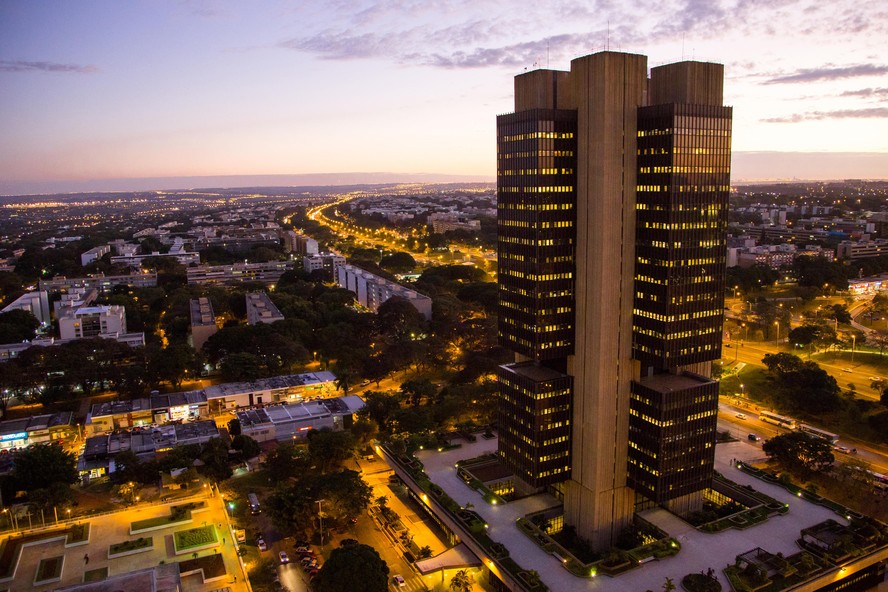
Market sentiment toward the government remains sour, signaling that the room for Selic rate cuts has become extremely limited as the inflation outlook deteriorates. Major investment firms in São Paulo’s financial district, known as Faria Lima, now forecast that the benchmark interest rate will remain at 13.75% throughout 2027. Meanwhile, the interest-rate market continues to price in the risk of the Selic returning to 15% next year.
The yield curve reflects an implied increase of about 25 basis points in the Selic by the January meeting, followed by further hikes throughout 2027, pushing the rate to around 15% by the end of next year.
Economists’ forecasts, however, rarely include rate hikes next year. The scenario increasingly taking hold, particularly after the Central Bank’s communication at its latest policy meeting, is that rates will remain at 13.75% through the end of 2027.
Firms that do not expect rate cuts include Ace Capital, BTG Pactual, Genoa, Itaú, Legacy, Morgan Stanley, Truxt Investimentos, and XP.
The rationale rests on two main concerns. The first is the deteriorating outlook for Brazil’s public debt following President Luiz Inácio Lula da Silva’s unexpected reelection.
Markets also widely perceive that the inflation outlook is deteriorating. Beyond currency depreciation, economists point to a series of factors that could put upward pressure on inflation in 2027. These include oil prices, the El Niño weather pattern, tax reform, and the proposed end of the six-day workweek with one day off, known as the 6×1 schedule. The update to the basket of goods and services and the weights used to calculate the Extended Consumer Price Index (IPCA), based on the 2024-2025 Household Budget Survey (POF), could also push inflation higher, depending on the new composition and price trends, some economists say.
Arthur Carvalho, chief economist at Truxt Investimentos, forecasts IPCA inflation of 6.5% next year. In a more adverse scenario for food and fuel prices, inflation could reach 8% in 2027.
“Cutting interest rates in an environment of accelerating inflation and unanchored expectations does not seem like prudent monetary policy. The Central Bank demonstrated that in its latest decision, when it chose to pause its rate-cutting cycle,” the economist noted.
In his view, the monetary authority should resume raising rates next year, even though Truxt’s baseline scenario is for rates to remain unchanged. “The bar they have set for further rate hikes is very high, with the Selic described as ‘substantially contractionary.’ I believe that assessment is mistaken. If a worse inflation scenario materializes, it will become clear that the real interest rate—the one that actually matters to the economy—is not as contractionary as the Central Bank believes. Once policymakers recognize that, the debate over rate hikes should resume,” he said.
Among the institutions tracked by Valor, Oby Capital is one of the few forecasting interest rate hikes in 2027, projecting that the Selic will reach 14.50% next year.

Camilo Cavalcanti, a partner and portfolio manager at the firm, said the Central Bank should have spelled out what outcomes it expects to see when describing the rate as “substantially contractionary,” how long it expects those conditions to take to materialize, and what deviations would warrant a change in strategy. “Without those criteria, the expression risks becoming a conclusion shielded from the evidence that should be used to test it. Commitment to the inflation target requires more than simply stating that interest rates are high. It requires showing why they are high enough and how long they will need to stay that way,” he argued.
Expectations of rate hikes are also limited by the prospect of increasingly weak GDP growth in 2027. In recent days, revised forecasts released by financial institutions have pointed to economic growth of less than 0.5%, with some firms already projecting a contraction next year, including Genoa.
Leonardo De Paoli, a partner and economist at Legacy Capital, said stagflation in 2027 is the firm’s baseline scenario. The Selic’s prolonged stay at a high level should further slow consumption and constrain corporate investment, resulting in zero GDP growth. On the inflation front, a series of shocks related to the exchange rate, taxes, and labor costs, as well as higher oil prices throughout 2026, will keep IPCA inflation in a range of 5.5% to 6%. Legacy currently forecasts inflation of 5.7% in 2027, with risks tilted to the upside.
Against this backdrop, the Monetary Policy Committee (Copom) is likely to keep the Selic unchanged at 13.75%, but confidence in that forecast is low, De Paoli said. “There is uncertainty about the economic policy the government will pursue going forward, particularly because the measures announced during this election cycle, if implemented, are likely to make the challenge of fiscal consolidation even greater,” he warned.
De Paoli also notes that, despite the deterioration in the inflation outlook, the monetary authority has shown to be sensitive to the economic slowdown. “It seems to be a Central Bank that would need to see a much greater deterioration than what has occurred since the second-round election results before increasing the degree of monetary policy restraint,” the economist said. “Economic activity appears to carry significant weight in its reaction function. Unless there is a substantial worsening in the exchange rate, the Central Bank is unlikely to move,” he concluded.
The Legacy economist emphasized that, beyond fiscal problems and the economic cycle, the market is concerned about the government’s appointments to lead the Finance Ministry and, in particular, to fill vacant seats on the Central Bank’s board. In his view, the Planalto Palace’s overtures to figures associated with heterodox economic views, along with discussions about changing the 3% inflation target, have unsettled market participants in recent weeks. Investors fear the Central Bank could adopt a reaction function that places less emphasis on inflation.
“This is a concern in the market. The names the President Lula appoints to the Central Bank could matter even more to investors than his choice for the Finance Ministry,” he noted.
Among the names under consideration, economist André Roncaglia, currently Brazil’s representative at the International Monetary Fund (IMF), has caused concern among market participants. De Paoli also believes that resuming the rate-cutting cycle would be challenging even if the government pledged credible spending-side fiscal adjustments, since the market would demand their “effective implementation,” a process that would take time. “There would obviously be a significant easing of risk premiums, especially because the bar for positive surprises from the government is very low,” he added.
According to XP Investimentos, the exchange rate will be crucial to the Selic’s trajectory next year. “The Copom could resume monetary easing if financial assets stabilize and the inflation outlook improves. Alternatively, it could raise rates again if economic fundamentals warrant it,” said economist Rodolfo Margato.
Morgan Stanley does not expect any Selic cuts in its baseline scenario, as fiscal uncertainty and its implications for inflation expectations are likely to limit the scope for monetary easing. The bank nevertheless acknowledges that risks are tilted toward lower rates because of weakening economic activity.
The U.S. bank’s strategy team notes that Brazil’s yield curve commonly incorporates rate-hike premiums during periods of intense fiscal uncertainty. “But those increases materialized only in the two previous episodes of perceived fiscal dominance, in 2015-2016 and 2024, when the Central Bank was already raising interest rates. In other words, a higher hurdle would have to be overcome to shift from rate cuts to hikes this time,” the team said.
In Morgan Stanley’s assessment, the Central Bank could be forced to raise rates if volatility in the real increases again and inflation expectations for 2029 reach 4.50%, the upper limit of the tolerance band around the inflation target.
“According to the latest Focus survey, expectations for 2029 are around 4%, up approximately 0.5 percentage point since the election. We note, however, that they have already reached this level in previous years, including during the debate over the inflation target in 2023. A level of 4.5%, by contrast, would signal an unprecedented de-anchoring of long-term expectations in recent history and could be enough to force the Central Bank to reaffirm its commitment to the inflation-targeting regime,” the team concluded.
*By Gabriel Roca, Gabriel Caldeira and Victor Rezende , Valor — São Paulo
Source: Valor International
https://valorinternational.globo.com/