
Sixteen elected governors backed Bolsonaro’s movement, but experts expect shifting alliances to preserve governability
Governors were elected in runoff races in five states—Acre, Amazonas, Tocantins, Espírito Santo, and Rio Grande do Norte—as well as the Federal District on Sunday (Oct. 25). Two are aligned with President Luiz Inácio Lula da Silva (Workers’ Party, PT), who won reelection with 51.78% of the vote, while four were allies of Sen. Flávio Bolsonaro (Liberal Party, PL). Including the first round, 16 of the governors elected nationwide had declared support for Bolsonaro’s political movement, seven backed Lula, and four remained neutral during the campaign.
The PL elected the largest number of governors, with six, followed by the Social Democratic Party (PSD), with five. The PT, Republicans, and Progressive Party (PP) each won four governorships. These five parties will control the state governments of 23 of Brazil’s 26 states and the Federal District. Overall, Sunday’s results largely confirmed the forecasts in election polls published on the eve of the vote.
Two candidates overturned their first-round deficits. In Tocantins, federal deputy Vicentinho Júnior (Brazilian Social Democracy Party, PSDB) defeated Professora Dorinha (Brazil Union, União Brasil), who had Flávio Bolsonaro’s backing. Vicentinho finished second in the first round with 43.94% of valid votes, compared with Dorinha’s 45.52%. Vicentinho is the son of former Sen. Vicentinho Alves.
In Rio Grande do Norte, governor-elect Cadu de Lula (PT) also overcame his initial disadvantage, winning 50.77% of valid votes to defeat Alysson (Brazil Union), who had remained neutral in the presidential race. Cadu Xavier, who used the name Cadu de Lula on the ballot, served as finance secretary under Gov. Fátima Bezerra (PT), whom he will succeed.
In Espírito Santo, former Vitória Mayor Lorenzo Pazolini (Republicans) was elected governor, defeating Ricardo Ferraço (Brazilian Democratic Movement, MDB) with 52.01% of the vote. Pazolini, who received Flávio Bolsonaro’s endorsement, stepped down as mayor of the state capital this year to run for governor.
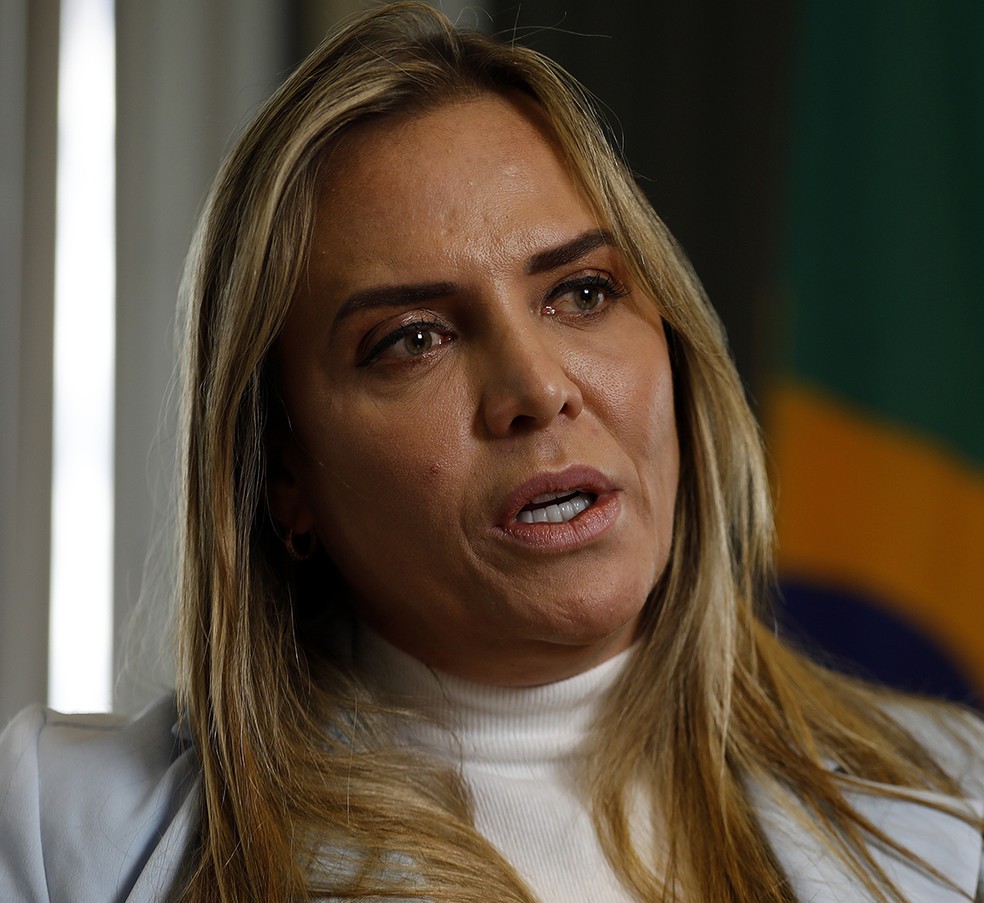
In the Federal District, Gov. Celina Leão (PP), backed by Flávio Bolsonaro and former first lady Michelle Bolsonaro, won reelection by defeating Leandro Grass (PT). With 98% of ballots counted, she had 57.21% of valid votes, compared with 42.79% for her opponent. She narrowly missed winning outright in the first round, falling short by just 1,089 votes.
In Amazonas, Sen. Omar Aziz (PSD), who had Lula’s backing, defeated Maria do Carmo (PL). With all polling stations reporting, Aziz received 61.42% of the vote, against 38.58% for his opponent. At 68, Aziz returns to lead the Amazonas state government after serving as governor from 2010 to 2014.
According to political scientists, despite many governors not being aligned with Lula, neither side is expected to face major governability problems, nor is the balance of power in Congress likely to be affected. One example is Republicans, who elected governors in two of Brazil’s largest electoral districts: Cleitinho Azevedo in Minas Gerais and Tarcísio de Freitas in São Paulo. Yet in the Chamber of Deputies, Speaker Hugo Motta continues to support the governing coalition, and the Republicans also holds cabinet posts.
Experts expect new political coalitions and alliances to emerge, as is typical of Brazil’s federal system. André Borges, a professor at the University of Brasília (UnB), said that although the PL elected the most governors and has a sizable presence in both the Chamber of Deputies and the Senate, this does not give the party a free hand at either the state or federal level.
“The PL was the big winner in the state elections, but other right-wing parties also performed well, such as Republicans. Power is not concentrated in a single party,” Borges said. Politicians will still need to negotiate and build alliances, he added. He cited the PL’s attempt, after the first round, to negotiate for the speakership of the Chamber of Deputies. “Hugo Motta has put together a coalition backed by 10 parties. Everything points to his reelection. That shows a tactical mistake on their part [the PL’s], because the election was barely over when they were already telling allies they wanted the leadership of both the Chamber and the Senate. That’s not how it works,” he said.
Experts expect Lula to maintain an institutional relationship with political opponents, as he did with São Paulo Gov. Tarcísio de Freitas during his current term. Despite their political differences, the two worked together on the Santos-Guarujá Tunnel, Brazil’s first immersed-tube tunnel, through a public-private partnership (PPP). “There was no boycott or anything of the sort; the money was transferred,” said Claudio Couto, a professor at Fundação Getulio Vargas (FGV).
Couto expects that pattern to continue. “If we look at Lula’s third term, with the far right already in power in some states, he has sought to maintain institutional relations. We saw that in his dealings with Tarcísio de Freitas and even [Ronaldo] Caiado, who took a very hard line on public security. There were disagreements, but no major clashes. I believe we will see the same pattern again,” he said.
Political scientists note that campaign endorsements can be fragile and may shift after an election. During former President Jair Bolsonaro’s administration, for example, Bolsonaro—who is in prison after being convicted in a coup plot—broke with then-São Paulo Gov. João Doria (PSDB) and then-Rio de Janeiro Gov. Wilson Witzel (Social Christian Party, PSC). In addition, governors, particularly those of Brazil’s largest states, are “natural potential presidential candidates,” Borges noted, creating another incentive for political rifts.
Experts acknowledge, however, that political alignment can help during campaigns and may influence the ability to attract investment once a governor takes office. “Alignment does have an effect, but less so today than in the past because social policies have become much more decentralized. Thirty years ago, before the creation of Fundef and Fundeb, the states played an intermediary role. Today, many programs transfer funds directly to municipalities based on more universal criteria, reducing the room for political bargaining,” Borges said.
Borges said two state-level candidates stood out: Pernambuco Gov. Raquel Lyra, who won reelection despite remaining neutral in the national campaign and defeating João Campos (Brazilian Socialist Party, PSB), the former mayor of Recife who had Lula’s support; and Cleitinho Azevedo (Republicans), who won the Minas Gerais governorship in the first round with 55.40% of the vote.
*By Marcela Villar and Guilherme Carvalho — São Paulo
Source: Valor International
https://valorinternational.globo.com/