
Study says agribusiness could supply the industry with ample feedstock
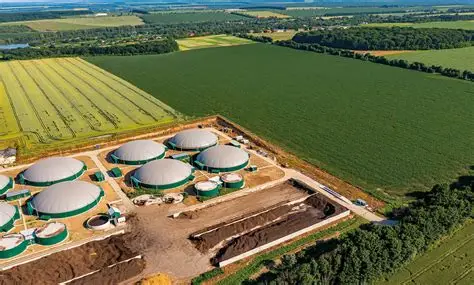
Biomethane production remains concentrated in developed countries. Emerging economies, however, also have opportunities because of their available feedstock, particularly agricultural and livestock waste, according to a study by Brazilian researchers supported by the Low Carbon Mobility Institute (MBCBrasil).
The study found that gas produced by biodigesting waste could provide emerging economies with a renewable transportation fuel that supports their climate goals, energy-diversification strategies, circular economies, and rural development.
The study, “From Waste to Wheels—Turning Organic Waste into Renewable Fuel for Transport,” was written by researchers Glaucia Mendes Souza of the University of São Paulo (USP), Clayton Barcelos Zabeu of the Mauá Institute of Technology (IMT), Heitor Cantarella of the Campinas Agronomic Institute, and Luiz A. Horta Nogueira of the Federal University of Itajubá. They compiled research to highlight the potential for biomethane adoption worldwide.
According to the document, today’s most mature biomethane markets are all in developed economies, including Sweden, Germany, Italy, France, the Netherlands, Denmark, Finland, Switzerland, the United Kingdom, Norway, and California. Other markets are expanding, including Brazil, the United States, China, India, Spain, Ireland, Austria, and Belgium. Biomethane is produced in approximately 40 countries and used as a fuel in about 30 markets.
The researchers said data from the International Energy Agency (IEA) show that the largest untapped opportunities for biomethane production are precisely in regions with substantial agricultural production, livestock farming, and urban growth, including Latin America, Sub-Saharan Africa, and South and Southeast Asia. Global production potential for biogas and biomethane is 1 trillion cubic meters a year, equivalent to about one-quarter of worldwide gas demand.
The availability of feedstock for biomethane production “is linked to economic development and population growth. As emerging economies expand their agricultural production and urban populations, the volume of organic waste they generate also increases,” the study said.
The researchers listed the main feedstock types and the countries with the greatest potential to use them. Animal manure is abundant in Brazil, India, China, and Argentina. Brazil, India, Thailand, and Indonesia have large volumes of agricultural residues. In contrast, Latin America and Southeast Asia have abundant agro-industrial waste.
Among nonagricultural sources, China, India, and Indonesia have the potential to use municipal organic waste, while landfill gas and wastewater sludge offer significant potential in large urban centers in emerging economies.
The researchers emphasized that countries such as Brazil, India, and China “already have experience adapting biomethane technologies to conditions in developing countries and can provide valuable lessons for other emerging markets.”
To encourage the biomethane market, the study cited countries that have adopted individual policies or combinations of measures, including fuel-blending mandates, sector-specific renewable-energy targets, physical infrastructure development, and financial or tax incentives.
The researchers also cited a study by the IEA, the Food and Agriculture Organization of the United Nations (FAO), the Global Bioenergy Partnership (GBEP), and the European Biogas Association. It found that many biomethane projects succeed by making their other products—such as biofertilizers—and environmental services—such as carbon credits—economically viable. Additional revenue streams for a biomethane project may include waste-management services, biofertilizer, renewable carbon dioxide, carbon credits, and guarantees-of-origin certificates. According to the study, these additional sources can account for between 20% and 60% of a biomethane project’s total revenue.
*By Camila Souza Ramos— São Paulo
Source: Valor International
https://valorinternational.globo.com/